Plan aims to boost economic mobility by increasing college attainment by 10 percentage points by 2030

KANSAS CITY – A bold new strategic plan released today aims to dramatically improve college and career outcomes for Kansas City-area students – citing data showing that only 13% of students from low-income schools will earn a college degree. Released by the Kansas City College and Career Attainment Network (KCCAN), an initiative of the Missouri College and Career Attainment Network (MOCAN), the plan seeks to raise that rate to 23 percent by 2030 by outlining concrete steps to help more students complete a college degree, technical program, or apprenticeship.
“The evidence is overwhelming: when education stops at high school, economic mobility often does too,” said Dr. Mako Miller, inaugural KCCAN Strategy Director. “Graduating twice is now the surest path to a good job and a stable future, yet too many students are navigating the college and career landscape without the support they need. Closing this opportunity gap isn’t just an educational goal – it’s an economic imperative. Kansas City can’t afford to wait, and this plan offers a clear, actionable roadmap to expand opportunity and mobility for young people across the region.”
The plan is the result of a 6-month process that brought together 75 stakeholders representing more than 40 organizations. Designed to complement efforts already underway in the region, the strategic plan details a coordinated strategy for driving improvement in three priority areas: career-connected learning, postsecondary enrollment, and postsecondary completion. Workgroups have been convened on each of these key outcomes and began meeting in December.
“KCCAN represents the kind of bold, community-based initiative that is helping make Kansas City a national model for real economic opportunity and equitable economic growth,” said Kansas City Mayor Quinton Lucas. “This plan will build on the progress we’re making and accelerate the transformative change that’s needed to close the educational opportunity gap and build an economy that works for everyone.”
Specifically, the plan calls for:
- Increasing Participation in Career-Connected Learning by expanding access to structured experiences to build career awareness and exploration and greater access to high-quality career-connected advising.
- Increasing Postsecondary Enrollment by helping more students complete financial aid forms and apply for scholarships, and increasing the knowledge of adults – especially counselors and families – regarding local career pathways, required credentials, and the affordability and return on investment of postsecondary programs.
- Increasing Rates of Postsecondary Completion through measures such as “stackable” credentials that let students accumulate marketable certifications along the way to a degree – with a special focus on credentials applicable to high-growth, high-wage industries in the KC metro area.
Stark Findings on College Attainment
The urgency of the work is underscored by stark findings from the Urban Education Research Center (UERC) at UMKC: 85% of students at low-income high schools in the KC metro graduate high school; 51% of those who graduate enroll in college; and 30% of those who enroll complete college. At these rates, only 13% of students from low-income schools will earn a college degree.
“This work matters because talent is everywhere—but opportunity is not yet equally accessible,” said David Miles, President of the Marion and Henry Bloch Family Foundation. “By bringing together educators, employers, community partners, and families, we can build a stronger, more equitable future for Kansas City’s students and for our regional economy.”
Early Wins: New Advisors Help Students Navigate College and Career Pathways
In August, MOCAN hired its inaugural KCCAN Advising Director, Elizabeth Mounteer, who leads a team of six full-time advisors placed in six KCPS high schools: East High School, Northeast High School, Lincoln College Preparatory Academy, Paseo Academy of Fine & Performing Arts, Central High School, and Southeast High School. Over time, the advising team may expand, enabling KCCAN to support more schools and districts across the region.
Research shows the impact of advising: students who receive one-on-one guidance from a school counselor are 3.2 times more likely to attend college and 6.8 times more likely to apply for financial aid than their peers.
“Graduating Twice” Increasingly Important to Economic Success
Of 28 factors impacting economic mobility, a postsecondary degree is the most impactful, according to Mobility Experiences. A postsecondary credential increases lifetime income by 39%, and college graduates earn roughly $1 million more over a lifetime than adults with no degree. By 2032, 65% of Missouri jobs are expected to require some education or training beyond high school, with nearly a third requiring a bachelor’s degree or higher.
In the Kansas City region, 40% of new jobs in the past decade have required a bachelor’s degree, yet only 34% of adults have that level of education, with even wider disparities among Black, Hispanic, rural, and low-income communities. The State of Missouri recently reaffirmed its statewide attainment goal of “60 for All” – ensuring that 60% of Missourians have a high-quality certificate or degree by 2030. While significant progress to this goal has been made, only 52% of Missourians currently hold such a credential, with rates dropping to 32.5% for Black Missourians and 33.8% for Hispanic Missourians.
Next Steps and How to Get Involved
As a next step, KCCAN also announced the formation of three workgroups to drive implementation of the plan, each focused on one of the three ultimate outcomes outlined in the report. Each workgroup will prioritize specific activities to undertake, using the strategic plan as a guide and reporting out quarterly.
KCCAN leadership is actively calling on the entire community to get involved by joining a workgroup or sharing your thoughts or providing feedback. To get involved, reach out to Dr. Mako Miller, KCCAN Strategy Director, at [email protected].
KCCAN launched in 2025 as an initiative of the Missouri College and Career Attainment Network (MOCAN) and is supported by a grant from the Marion and Henry Bloch Family Foundation. Its work builds on the collaborative KC FAFSA Initiative which led to a 15.4% increase in year-over-year FAFSA completions in 2024-25.
Read the full strategic plan and learn how to get involved.
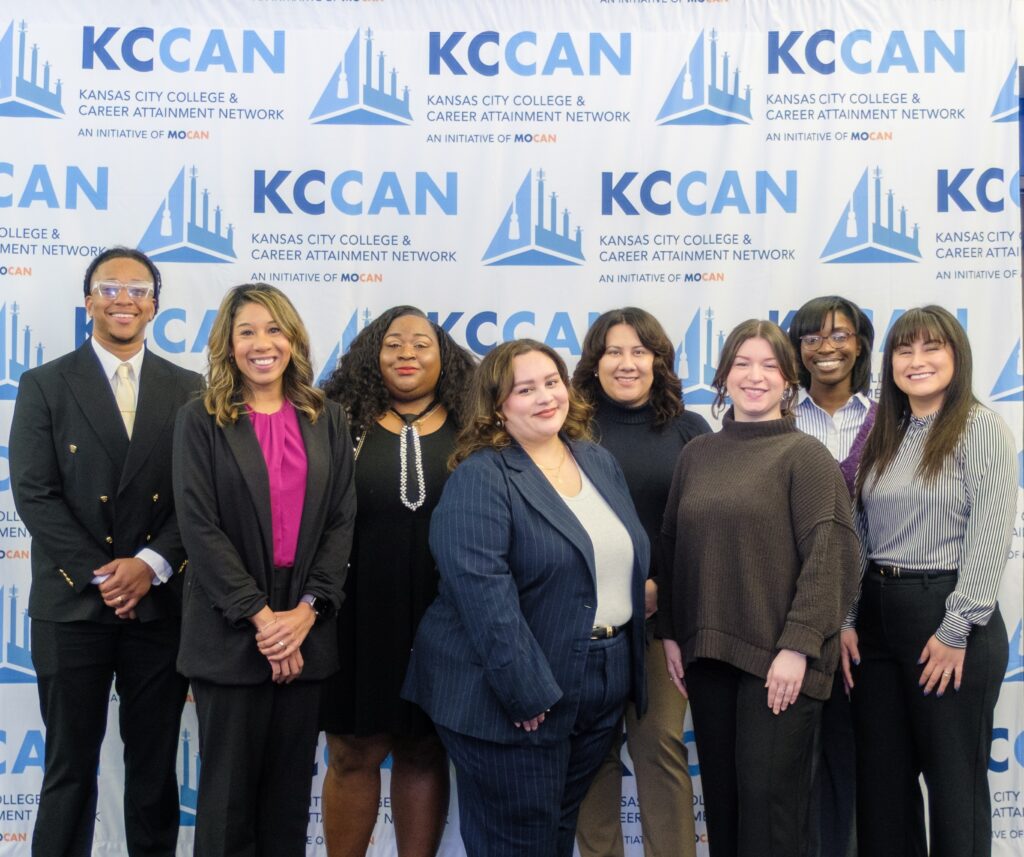
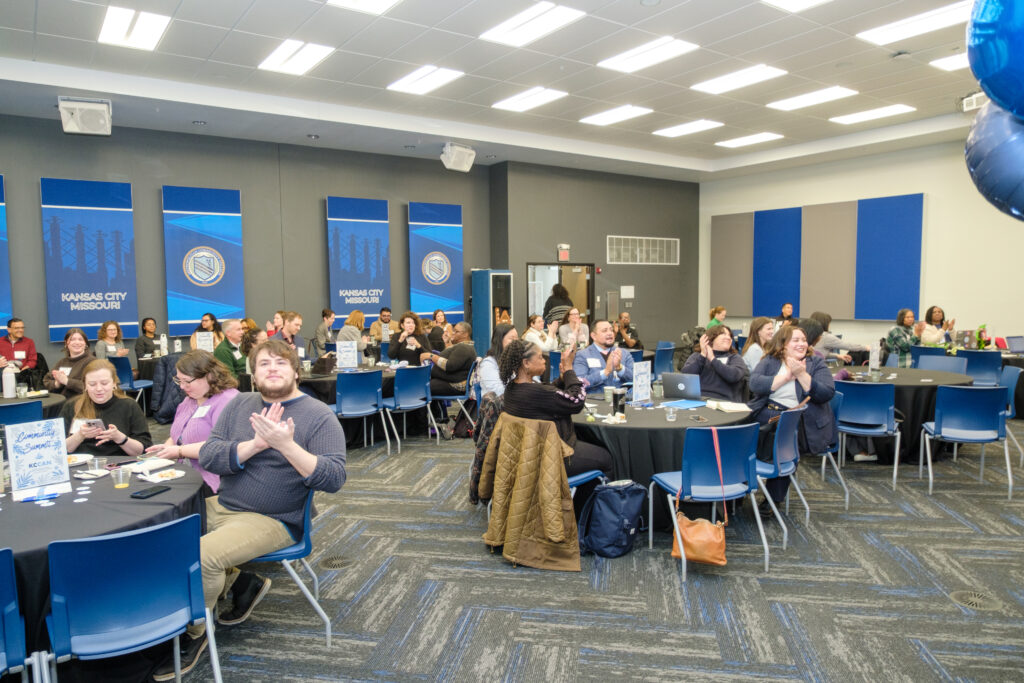
View photos from the celebration event in Kansas City.